
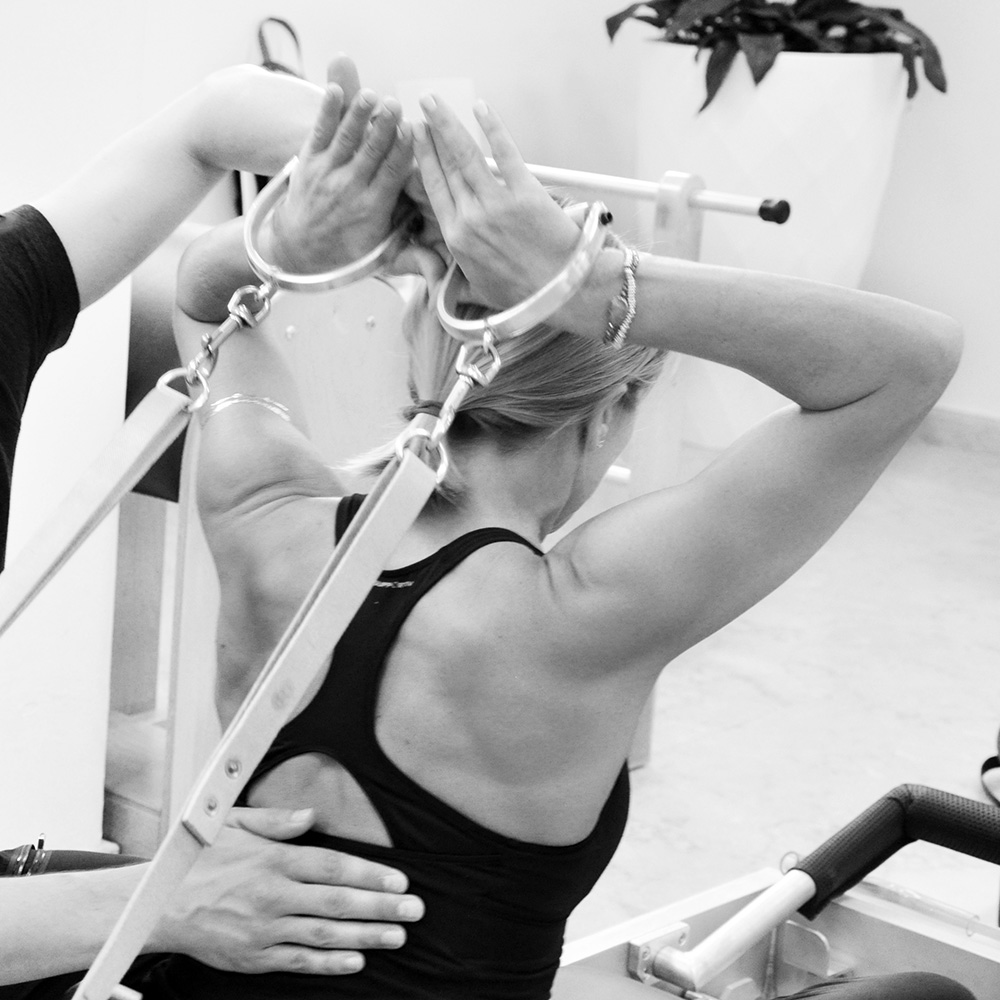
“Each student is given as nearly as possible the same regimen, and in kinds and amounts equal to his or her requirements under careful supervision.” ~ Joseph Pilates
In the original Pilates method, we are “given as nearly as possible the same regimen” because we are human bodies with—for the most part—similar layouts, frameworks, number of body parts, and muscles.
Our common possibilities for movement include rolling, crawling, squatting, lunging, hinging, jumping, walking, pushing, pulling, rotating, etc. And most of us share similar movement requirements for our daily life, no matter our fitness level or the number of conditions: getting out of bed, getting dressed, carrying objects, walking ourselves from A to B, and more.
And it is because of our mutual movement possibilities that the original Pilates work mandated a specific variety and sequence in its movement diet.
How far we can stick to the regiment of varied, full-body movement is limited on one end by our facility—our bone structure, for example—and by our willingness to engage with the body on the other. When it comes to the spectrum of abilities, we all take our own unique spot.
And as stated in the quote above, the original Pilates method was designed to accommodate the practitioners’ requirements.
Simply put, we need to acquire the mobility, strength, and control to make it through OUR everyday life without strain or pain. This concept can be adapted to the needs of a high-performance athlete and a sedentary person alike. Establishing a good understanding of what we should expect from anybody (ability to perform fundamental movement patterns well) and what may be unique to an individual body’s “specialties” (our masteries and our challenges alike) is vital to success in the Pilates method.
It’s not an accident that the original method’s repertoire ranges from regressive and corrective exercises all the way to highly athletic drills. How to navigate the method depends first and foremost on the needs and abilities of the practicing body and does not discriminate anything other than the willingness to work hard—” according to his or her requirements.”
It doesn’t matter if you’re young, old, tall, short, fit, sedentary, female, male… Not only can the Pilates method be adapted to meet you where you’re at, it was designed that way. It’s all about you.