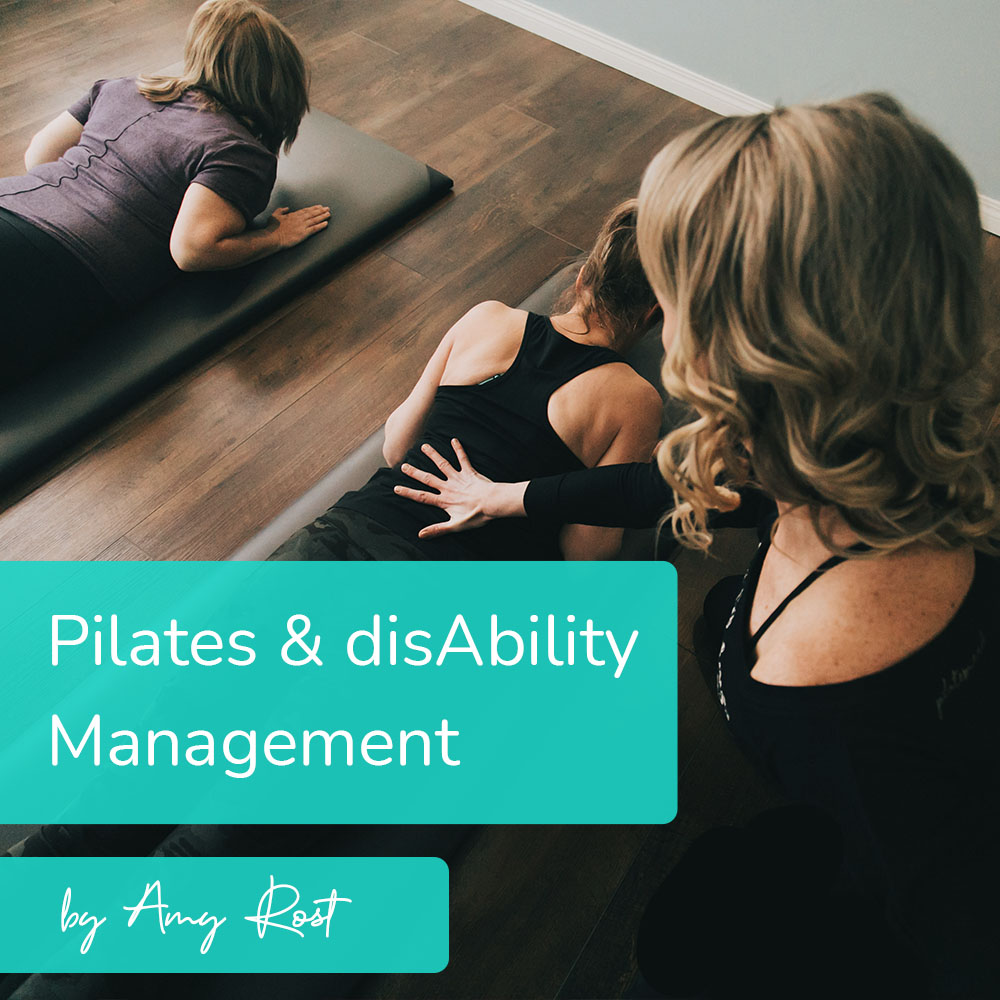
Before becoming a Pilates teacher, I worked as an Administrator of Disability Management in a spine clinic for 15+ years. My role was to oversee all files and help clients determine if a patient was fit to return to work. I facilitated the medical appointments with appropriate specialists to determine if a worker was fit to return to work. One thing that stuck out was that more times than not, the patient was fit to return to work in some capacity. However, the patient still experienced pain, loss of mobility and reduced quality of life. It had me thinking about what is next for each of these patients…
In most cases surgical intervention was not indicated, no medications or treatment options other than a recommendation that they needed to be more active. Most patients had lost their zest and pleasure for life and were sent on their way. Occasionally a suggestion would be made for a work-hardening program. This was often a 6-8 week program overseen by a kinesiologist or exercise therapist to help increase the client’s tolerance for fitness to return to work.
Something that often stuck with me was that many times a worker had been on medical leave more than once or that other significant life circumstances were preventing them from returning to work. There had to be a way to shift these client’s perspectives to movement, the notion of hurt verse harm and educate them to move successfully. The concept of hurt versus harm is often misunderstood, when we acknowledge that everyone experiences pain differently and discern that movement may temporarily increase pain, pain does not always equal harm. Once medically clearance and movement has been deemed safe hurt vs harm discussion can commence. We also know that the longer someone is off, the more difficult it is to get them back to meaningful employment.
Movement – it all starts with a movement and as Joseph Pilates said, “Change happens through movement and movement heals.” I found Pilates at a time when my body was run down, feeling broken and sore. Pilates helped me fall back in love with movement. It was the therapy that my body and mind needed. I often refer to it as my moving meditation. I knew there was something here that could benefit so many others; they just needed to know about it.
As I embarked on changing my career path, something became very clear to me, Pilates has a role in disability management and the overall wellness of every worker. The clinic where I worked was a multidisciplinary clinic, but Pilates was not part of the conversation. It would often be recommended, but no referral system was in place for these clients. Ultimately, patients would transition returning to work without addressing the issues of unwellness, pain and lack of mobility.
As a small studio owner, I have spent endless hours aligning, educating and collaborating with other healthcare workers to make Pilates the next link on the treatment and management chain.
Now, the longer I have been in private Pilates practice the more questions come to my mind. What if all of the files of clients who were cleared, from a medical perspective, to return to work but who still reported pain and reduced mobility were referred to an active Pilates program? What are the potential outcomes? Could patients be healthier, happier and more productive employees? Would that be cost savings, in the end, to help cultivate a healthier work environment?
I have experienced success working with insurance companies to get Pilates covered as part of a client’s rehab. Some plans in Canada have the option of a wellness account, and some plans will allow Pilates to be credited. Another revenue stream has been working with my network of healthcare practitioners. One successful venture for coverage has been physiotherapists recommending Pilates for additional strength and training. When we have a professional recommending a modality such as Pilates, insurance companies start asking more questions. Educating the insurance companies that as Pilates professionals, we do not treat the acute injury; instead, we facilitate new movement patterns to strengthen the body and continue to promote healthy movement as part of the treatment plan.
After this past year of a worldwide health crisis, now more than ever, wellness matters. I have had numerous conversations with other healthcare providers, employers and insurance companies about what is next. What is the next step to creating a healthy workplace where wellness matters? It may matter now more than ever. As an industry, we need to ensure that we are at the table discussing what we do, why it works and who it is for.
Some strategies that have worked well in discussions of this nature include ensuring that we are all talking the same language. That we use the vocabulary that speaks to the industries with whom we interact. We can help offer solutions to the problems and concerns that employers, insurance companies, and legal teams are experiencing with their workers/patients/clients. Companies are looking for ways to keep their employees well. A well employee requires less sick time, takes fewer leaves of absences and is more productive. Companies are starting to understand the investment in health and wellness actually helps their bottom line.
Many companies are looking at how to add wellness/movement opportunities to keep their employees moving. There is more than enough business to go around. We can’t see every employee, every disability management file or every single injury claim. Still, we can start creating conversations and discussions around what we do and how we can help. We are part of the solution, we are the next link on the chain of movement strengthening. We are also the solution in preventative health. What if the Pilates industry looked to position itself as part of the solution, where we are an essential part of the multidisciplinary team to keep workers moving, healthy and productive? We are the next piece that will empower those individuals to move well and we can teach them to incorporate movement into their everyday life.
Pilates teachers know there is so much value in our method. No matter your training, we can help the body move, help the mind settle, and open the spirit to new potential. I believe that if we work together to strengthen our networks with like-minded professionals we can grow our businesses and create sustainable models that help the world to move more.
We know that sitting is being referred to as the new smoking. What could we contribute to that pain point? We are movement educators, so let’s move to educate businesses, employers, insurance companies, and lawyers on helping their workers/clients be well, move better, and improve their overall health and wellness.
I always come back to empowering the ability piece in the label of the disABILITY. Now, not every client, patient, or employee will buy-in but what if we were able to educate one person and one business at a time? What if we came to the table with an option for employees to choose health and wellness to keep them productive in the workplace? Pilates is that piece of the puzzle.