
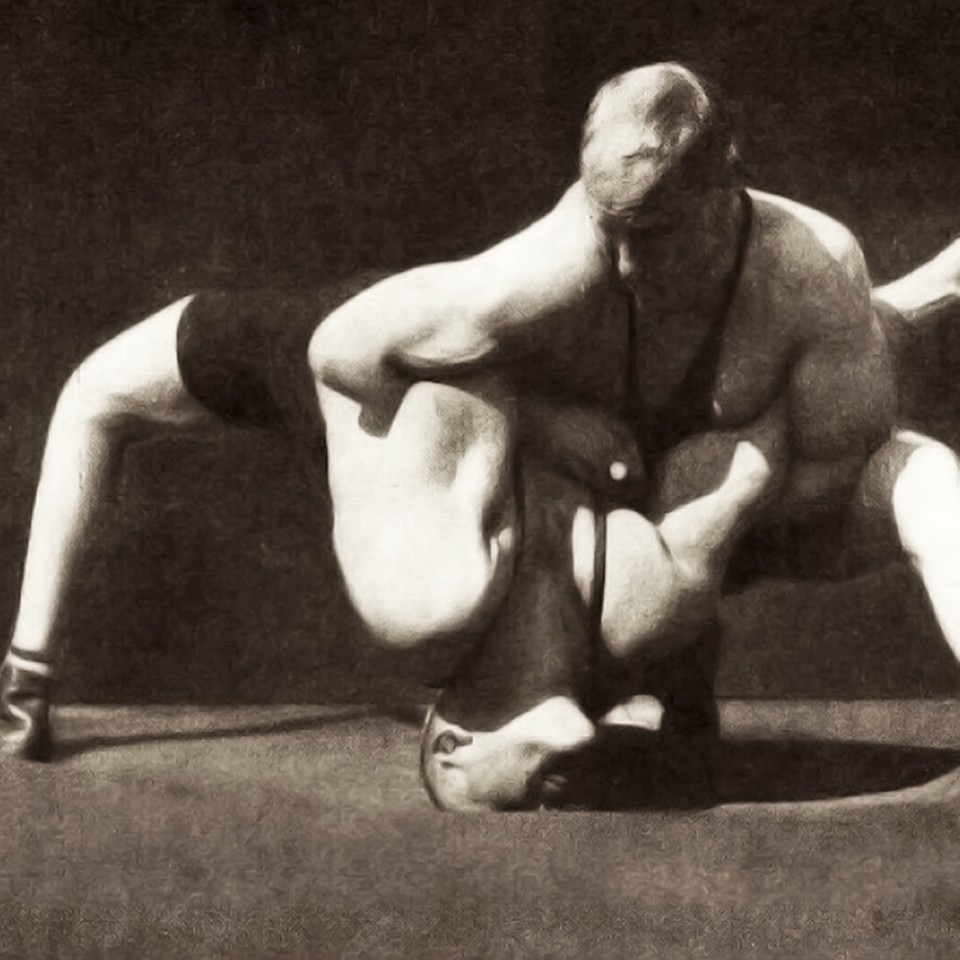
Every now and then, as you browse the original catalog of Pilates exercises, you come across movements that seem to come from a different universe; how does an exercise like the Wrestling Bridge seem to fit in with Pilates, a training method that focuses predominantly on relatable, functional, everyday movement?
As is often the case, a look back in time (before Pilates) can provide the answer. The Wrestling Bridge is a drill familiar in the world of martial arts—undoubtedly the place where Joseph Pilates found the inspiration to translate this maneuver into his unique exercise environment and apparatus. And while Pilates is not a martial art, the exercise fits right in with many of the tenets of the method: it strengthens the neck with the use of bodyweight and propulsion (the head and neck actively driving into the ground to lift the body up), and is an expression of a deep backbend (check out our Learning Curve on Backbending). In fact, combine the Headstand Back, the Roll Onto the Head and Chest Expansion (not to mention all the Neck Stretcher work), and the Wrestling Bridge no longer seems out of place; it’s simply an escalation of skills we’ve been practicing all along.
By the way, the reason wrestlers train to bridge onto their head is to avoid being “pinned”, which is when one or both shoulder blades touch the mat for more than two consecutive seconds. If someone pins their opponent, the match is over (and they win). The Wrestling Bridge is also commonly called the Neck Bridge or Grappling Bridge.
In Pilates, this exercise is certainly not an introductory move and requires years and years of mastery in any of the skills that precede it, which is why it is often disregarded as an archival, super-advanced, sometimes even irrelevant (or dangerous) move for the modern body. But, we like to think of it as a peak expression of the work and a muse for the practice, as it exemplifies the kind of control we are working towards—whether we’ll ever get to practice or accomplish this exercise or not.
In addition, it beautifully pays homage to the Pilates method’s diverse and original sources of inspiration.
Join us as we pick an original Pilates exercise to “throw back” to each Thursday.